Complete pneumatic conveying systems.
Engineered, sized, and supplied correctly for stable dilute-phase bulk material handling — from concept through startup support.
CPS provides complete pneumatic conveying system design and equipment supply, or targeted support when part of your system needs attention. We help customers select and size the right components — including rotary airlock valves, diverter valves, slide gates, blowers / vacuum systems, magnets, cyclones, and filtration — so the line performs reliably.
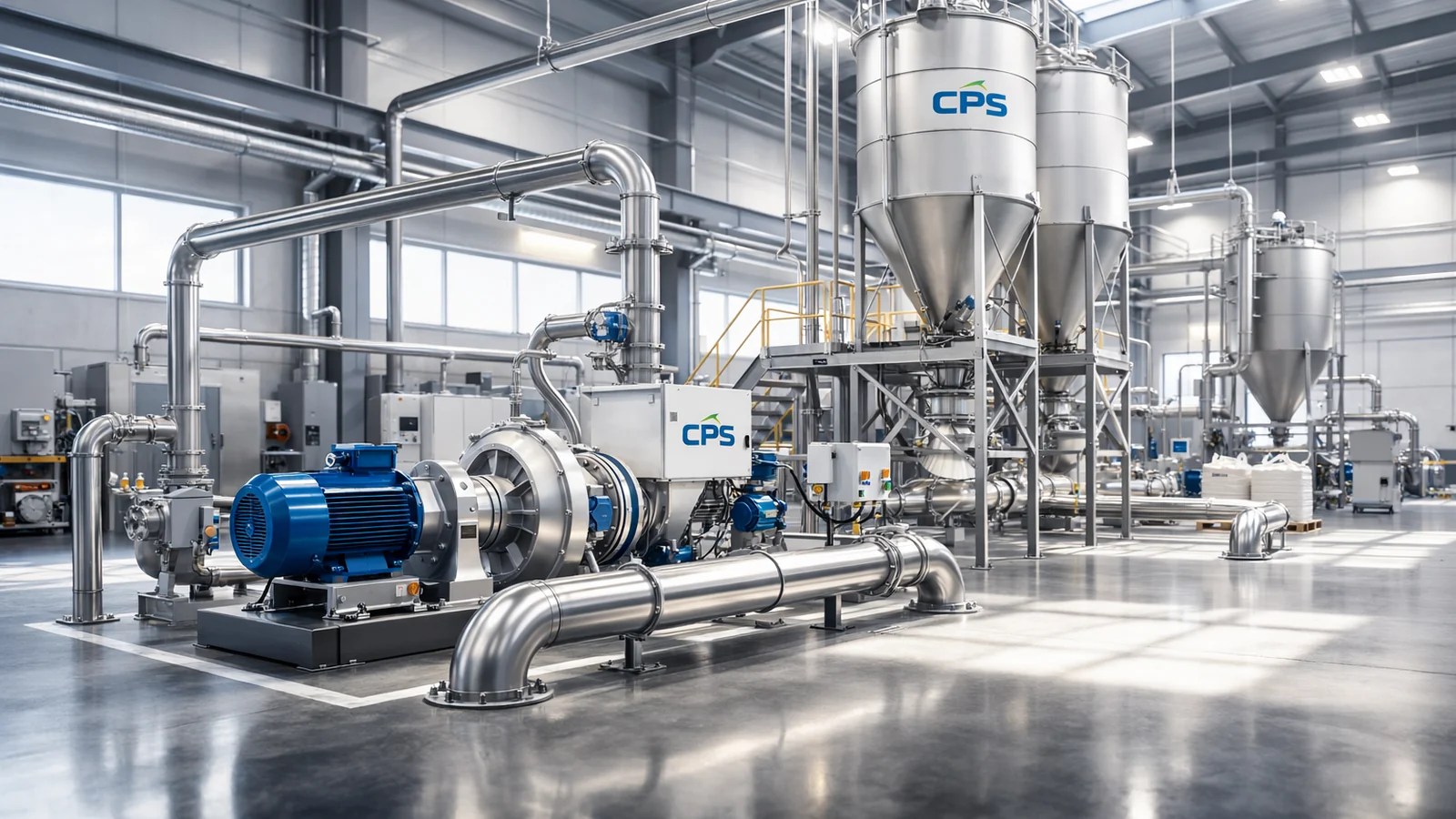
Complete system design
System layout, routing, pressure drop, air mover sizing, and component specification — engineered to run stably and predictably.
Partial system supply
Specify and supply the right equipment for your application: rotary valves, diverters, slide gates, blowers, magnets, cyclones, filters.
Diagnosis & upgrades
Fix plugging, instability, excessive wear, dusting/leaks, or missed throughput targets — and recommend the highest‑leverage next step.
Engineering-led sizing — not guesswork
Pneumatic conveying reliability comes from the whole chain: material behavior, air velocity, routing and bends, pickup and discharge, and component selection. CPS focuses on the variables that drive stability, wear, and capacity.
- Material assumptions: bulk density, particle size, moisture, abrasiveness, fragility
- Throughput targets: kg/hr or lb/hr, duty cycle, growth allowance
- Layout constraints: distance, number of bends, elevation, destinations
- Air system selection: pressure or vacuum, blower sizing, filtration approach
- Component selection: rotary valve type/clearances, diverter style, slide gates, magnets
Typical deliverables
Depending on scope, CPS can provide:
- Equipment recommendations and part selections
- Concept layouts and routing guidance
- Upgrade paths for underperforming systems
- Startup/commissioning support (project dependent)
Need a quick recommendation?
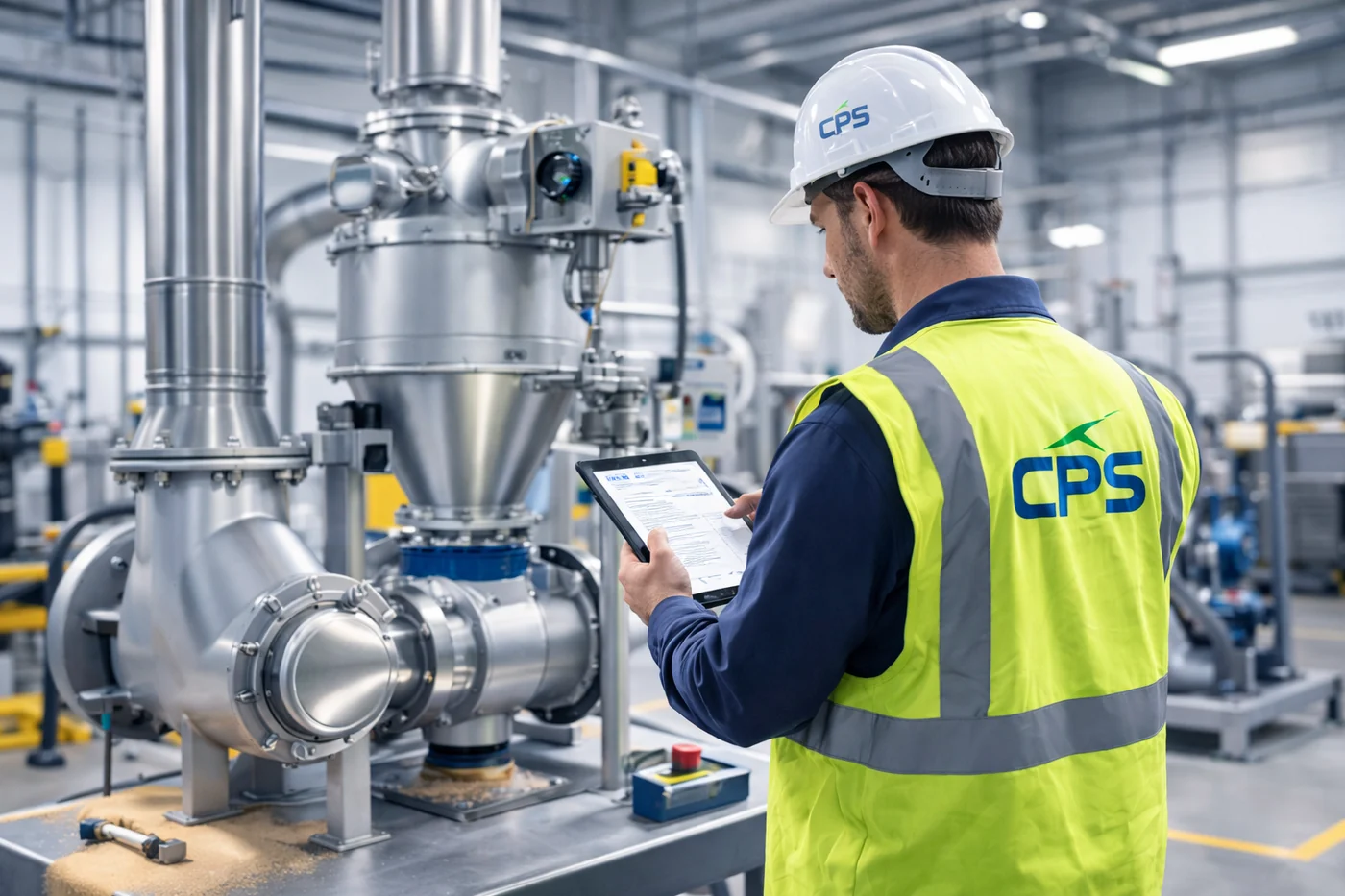
Applications
Dilute-phase pneumatic conveying is often a strong fit for many dry bulk solids such as plastic pellets and regrind, flour/sugar/starch and other ingredients, grain and feed materials, wood dust/shavings, and many industrial powders. Final suitability depends on bulk density, particle size distribution, moisture, abrasiveness, and fragility.
New systems
Plant expansions, new lines, new destinations, or replacement of legacy conveying with a properly sized system.
Underperforming lines
Capacity shortfalls, plugging, velocity issues, wear and breakage, dust/leaks, or unstable conveying behavior.
Targeted upgrades
Component replacements and retrofits: rotary valves, diverters, slide gates, magnets, filtration, or air mover changes.
How projects typically run
1) Define requirements
Material, throughput, distance, bends, elevations, and destinations. Identify failure modes and constraints.
2) Size & specify
Select air system approach and specify key components (rotary valve, diverters, filtration, magnets, piping style).
3) Supply & support
Provide equipment and practical guidance for installation and commissioning to achieve stable performance.